
An Everhot cooker consumes half the energy of similar heat storage range cookers, and was designed to harness renewable energy.
It was with this in mind that I installed PV (solar) panels at my property in Weardale, Co. Durham.
My purpose in investing in these was twofold; to offset some of my carbon footprint and to save money on my annual electricity bill. I was aware that the government incentives for installing panels have been eroded over the years, but the principal driver was to cover the cost of running the Everhot cooker as I near retirement.
My property lies in a remote part of NE England and sits at an elevation of around 1,000 feet – winters are harsh and the area is often shrouded in mist or covered in snow!
It is not an ideal area for PV generation and further south in the country there will be an improvement on the figures I produced but I was lucky to have an unobstructed, south-facing roof that could accommodate 18 panels (4.59 kW).
My recommendation in choosing an installation company would be to speak to an expert, rather than someone who fits panels as part of their other business activities.
I used a local company based on a recommendation; they assured me that despite regularly experiencing winds in excess of 60mph the panels would be well anchored, providing the roof stayed on, so would the panels!
Smart Export Guarantee
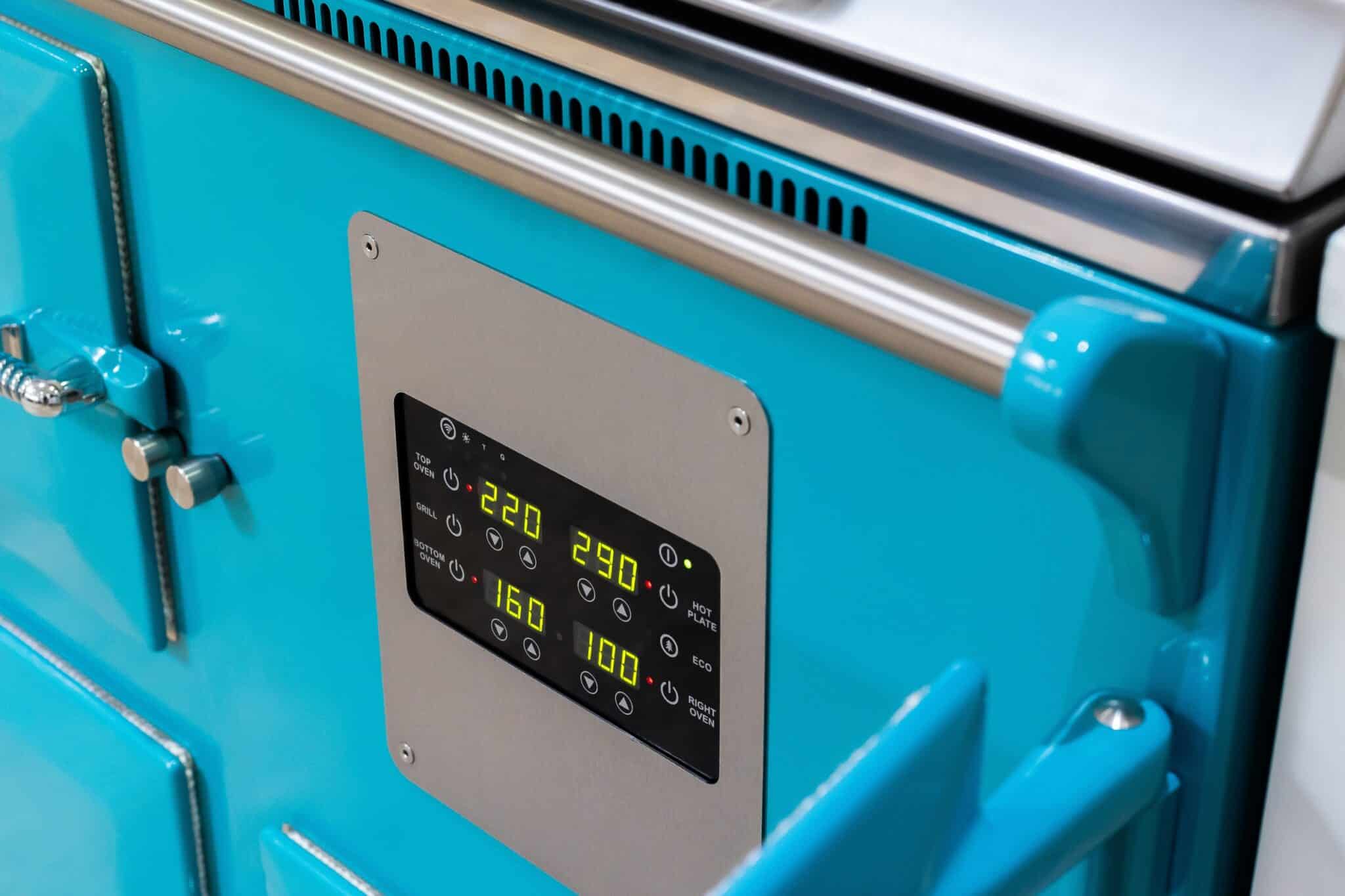
The new Everhot control box is Wi-Fi enabled and allows you to control your cooker remotely, as well as providing new Smart features.
The Smart Export Guarantee pays 12p for each kW of electricity exported to the grid, and this is either paid quarterly or directly by your energy supplier through a reduction in your bill.
In contrast, my electricity provider charges 24.67p/kWh and hence it is immediately apparent that it is advantageous to use the power generated, rather than export it.
With this in mind, I installed a device (iBoost) that automatically diverts power to the immersion heater to top up the hot water tank and only when this has reached its set temperature, does power start to be exported.
During the summer months, my oil boiler was not required as hot water was being provided from the PV panels – a significant saving in oil over the year.
The Everhot cooker will call for power whenever it needs it in order to maintain the temperatures that have been set for it; it does not have a constant requirement for power but is ideally suited to be used in conjunction with any sort of sustainable energy system – it was originally developed with small-scale hydroelectric systems in mind.
Energy Usage Summary
On the first anniversary of the installation, the finances worked out as follows:
Energy Generated (A) 4,320 kWh
Energy Exported (B) 1,884 kWh – 12p per kWh (1,884 (B) x 0.12) = £226.08
Energy generated but consumed in house (C) = (A) – (B) = 2,436 kWh (2,436 (C) x 0.2467) = £600.96
The total savings associated with PV panels (excluding oil for water heating) = £827.04
The estimated cost of running the Everhot 100 is 75 kWh per week x 52 weeks = 3,900 kWh, equating to £962.13* (3,900 x 0.2467)
When solar and the Smart Export Guarantee are factored in, I have nearly achieved my aim of covering the cost of running the cooker, with the total cost being £135.09 for the year, which is less than the cost of a cup of coffee a week.
*Energy prices at the time of printing (April 2026).
Conclusion
This one-year study concludes that the cost of running an Everhot cooker can be considerably offset by the installation of 18 solar PV panels with a peak power of 4.59 kW.
The obvious drawbacks are that in all PV installations, when the sun goes in, the power drops away and additionally the winter months yield nothing like the summer period – this will always be the case, but ongoing research into ‘house batteries’ which will allow unused power to be stored and called upon when needed is improving all the time.
The prices of these home battery systems are now tumbling and are a very attractive proposition.
The initial cost of the installation was around £5,000 and the return in the first year was around 14% – it is by no means a ‘get rich quick’ scheme, but with the initial premise of covering the cost of running the cooker, I consider it very successful.
Keeping In Touch
Stay connected with latest Everhot news and inspiration on Instagram and Facebook, or you can join our Facebook Discussion Group. For our latest video content, please subscribe to our YouTube channel.
