
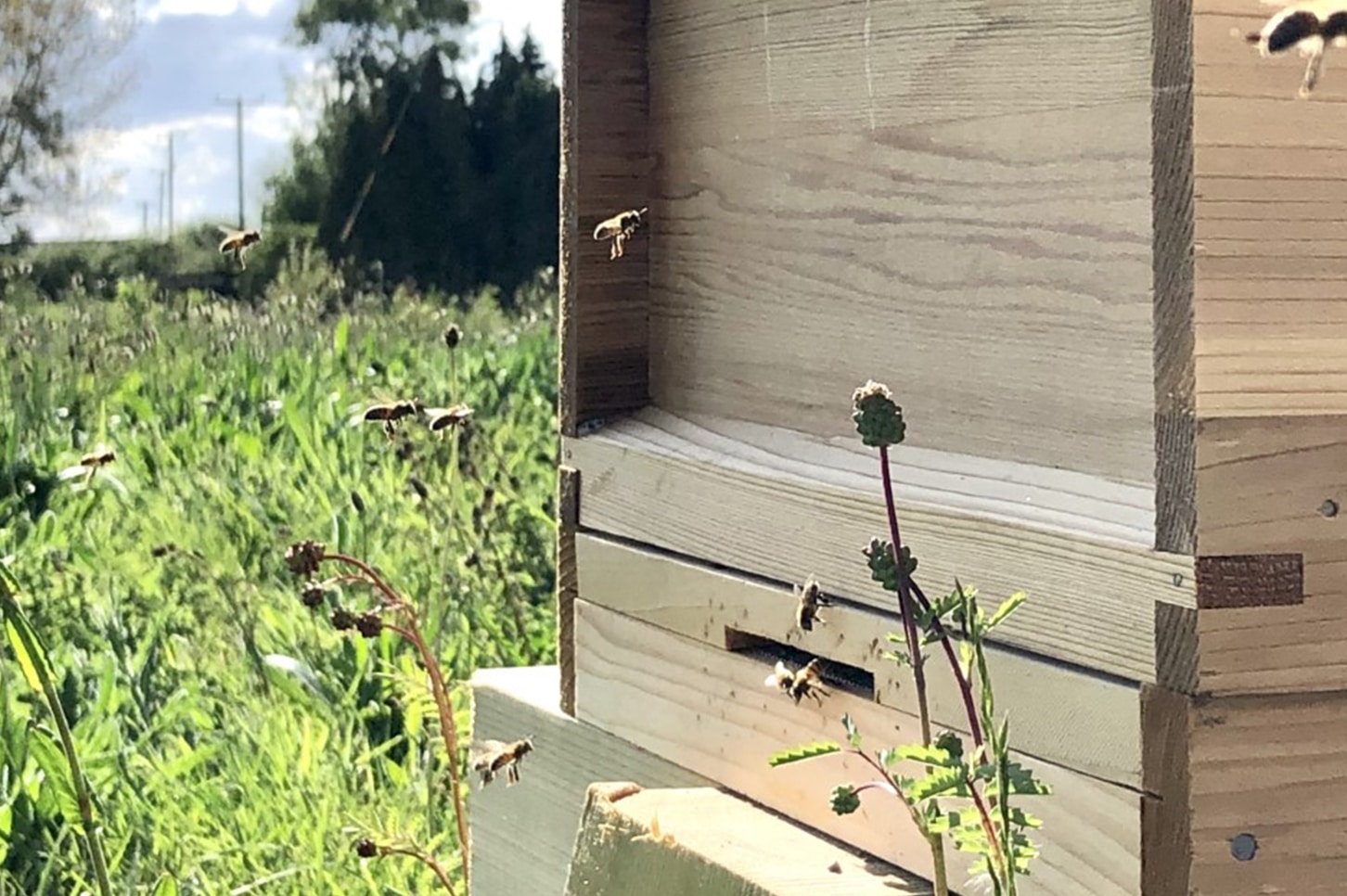
This time last year we were buzzing about, awaiting the arrival of 200,000 bees! That might sound a lot, but actually we’ve homed just four hives.
Two here at our head office in Coaley Mill, just the other side of the mill pond, and another two a couple of miles up the road at one of our tree planting sites. Each hive is just getting busy again as the sun starts to come out this springtime with between 40,000 and 50,000 honeybees per hive.

The Everhot Bees
Our bees were ‘delivered’ by Martin Knight from Knight’s Beekeeping who also managed to produce a few dozen jars of honey for us last autumn. During the winter they have been much quieter. The weather causes them to form a tight cluster together to keep themselves warm and protected from the cold and windy conditions. Martin says: “They actually have the ability to unhook their own wings and then vibrate their flying muscles to stay warm – incredible.
“Come the spring when the flowers burst into life, the queen will start laying again and the forager bees will be out collecting food. A queen can lay hundreds of baby bees a day. These are then tended to by her worker bees who all take on different roles within the hive – nurse bees, cleaner bees, even undertaker bees! It’s a complex society with all the bees knowing exactly what their role is amongst the colony.
Why do we need bees?
The bees have been introduced to our two sites alongside our newly planted tree saplings, wildlife pond and wildflower meadows. The combination ensures the bees have somewhere to gather food and in turn we benefit from their pollination. Honeybees are very efficient pollinators, and together with wild bees like bumbles and solitary bees, they are crucial to the production of food, agriculture, and trees. A honeybee can visit hundreds, if not thousands of flowers in a single day.
However, we have specifically chosen to introduce just four hives to try and ensure that the local wild bees are not competing with the honeybees for food. We have also built a bee bank for solitary bees by leaving a sandy edge of lawn about 20 metres in length which is full of burrowing bees. And last year, we noticed a colony of tree bumblebees who have taken up residence in one of our older unused nest boxes. It’s bee-licious here.

Why is honey good for us?
From our four hives, Martin tells us that we can expect 10 to 20kg of honey per hive per year! Fantastic results. Martin tells us that there is an endless list of health benefits from eating organic honey. That’s because it’s rich in antioxidants which help to lower blood pressure and can reduce cholesterol. Both of which can contribute to heart attacks and stroke. We’re hearing more about more about honey as a hay fever cure, but it has to be local honey “we’ve seen it enough times to believe it” says Matin. So, we will all be stealing a teaspoon a day! There are mental health benefits too: “bees have a beautiful nature of focussing the mind on the present. Being surrounded by the bees and their world helps you step and take a moment out of the busy nature of your own.”
We’ll be keeping you up to date with the comings and goings of our honeybees, both here on our Blog and also on our social platforms. Do follow us for all the latest updates.
Keeping In Touch
Stay connected with latest Everhot news and inspiration on Instagram and Facebook, or you can join our Facebook Discussion Group. For our latest video content, please subscribe to our YouTube channel.
